The Olympic Peninsula is Washington's most complete RV trip — rainforest, Pacific coastline, mountain views, and a Hood Canal finale, all connected by one highway. Four stops, each worth staying at for a few nights. No ferry required, and a clockwise route that gets easier as you go.
US-101 rings the Olympic Peninsula like a picture frame. You can technically drive the full circuit from Seattle in a long weekend, but that misses the point. Setting up and breaking down camp takes real time and energy — loading utilities, leveling the rig, running slides, reversing out of a site. Doing that every day is exhausting. Each stop on this route has enough to fill 2–3 nights comfortably, and most people who've done the loop wish they'd stayed longer rather than shorter. A week is a good trip. Ten days is a better one.
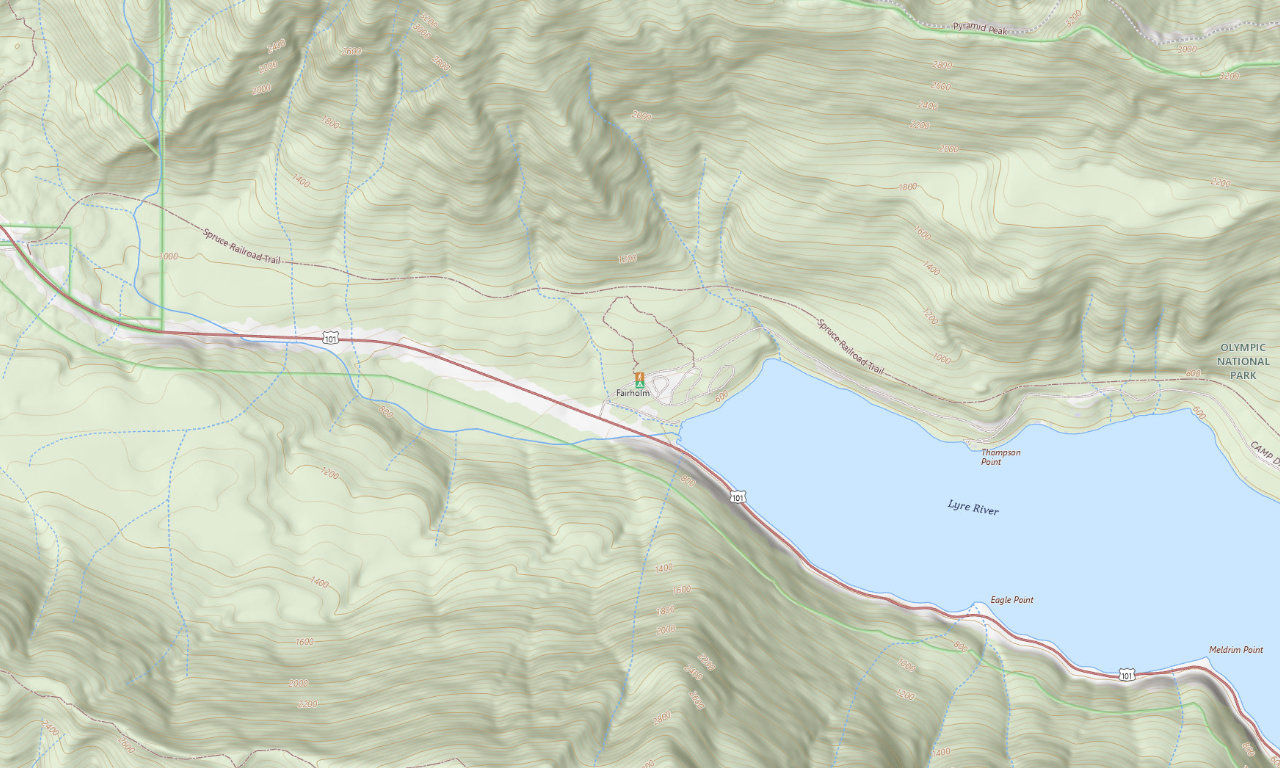
The route goes clockwise: north over the Hood Canal Bridge to Port Townsend, west along the Strait of Juan de Fuca to Salt Creek, south through the rainforest corridor to Forks, and down to the Pacific coast at Kalaloch. The return from Kalaloch runs east on US-12 to I-5 — you never double back on a road you've already driven. Three of the four campgrounds have hookups; Kalaloch is the exception, an Olympic National Park bluff camp above the open Pacific with no electric or sewer. The National Park campgrounds in the interior — Hoh, Fairholme, Heart o' the Hills — are worth day trips from your base camps but too primitive for most RVers to overnight.
One note for first-timers: the main skill this trip requires is backing into a hookup site. Practice that before you leave — even one session at a county park will build the muscle memory. Everything else on this route is straightforward driving on major highways with no switchbacks or tight mountain passes.
Fort Worden is the right place to start this trip. A decommissioned coastal artillery installation on the northern tip of the Olympic Peninsula, the park has full-hookup RV sites on the beach directly overlooking Puget Sound and the Cascade Range. Concrete gun emplacements, officers' quarters, and a parade ground are a 5-minute walk from your site. It eases you in — Victorian Port Townsend is walking distance, the site setup is easy, and you arrive without a full day of Olympic Peninsula driving behind you.
Take the Hood Canal Bridge from Seattle. The bridge is free in the westbound direction and straightforward for rigs up to 75 feet. From Port Townsend, Fort Worden is minutes from the ferry terminal and downtown. Spend your second day in Port Townsend — it has good restaurants, a historic downtown, and a lighthouse you can walk to from camp. Book well ahead; this one fills months out, especially in summer. Note for 2027 trips: Beach Campground sites 18–50 close January 1 through June 30, 2027 for electrical upgrades — the rest of the campground stays open.
- Best for: Easing into the trip. Easy site setup, Port Townsend access, strong first-night campground vibe.
From Fort Worden, it's about 45 minutes west on US-101 to Salt Creek — hugging the south shore of the Strait of Juan de Fuca the entire way. The campground is on a bluff above the Strait with unobstructed views across the water to Vancouver Island. On a clear day you can watch container ships and ferries pass through the shipping lane below. It's one of the most dramatic campsite settings on the peninsula.
The real draw beyond the views is Tongue Point — a short trail from camp drops you onto one of the best tidepool fields in Washington. At low tide you can walk the exposed shelves and find anemones, sea stars, and urchins in the pools. This is also your best staging spot for Hurricane Ridge: Port Angeles is 20 minutes east, and Hurricane Ridge Road takes you to 5,200-foot alpine meadows in another 35 minutes. Do the Strait in the morning, Hurricane Ridge in the afternoon, and you've had a full Olympic day without moving your rig.
- Best for: Views and tidepools. Hurricane Ridge is an easy day trip. Book early — this is a Clallam County park and fills up fast in summer.
The drive from Salt Creek to Bogachiel is about 90 minutes south on US-101 — through Port Angeles, past the turnoff to Hurricane Ridge, and down through the temperate rainforest corridor toward Forks. Bogachiel State Park is on the banks of the Bogachiel River, one of the wild salmon rivers flowing out of Olympic National Park. The forest here is genuine old-growth rainforest: towering Sitka spruce and western red cedar draped in moss, with the river audible from every site.
Forks is 5 minutes north and has a full grocery store, fuel, and supplies — this is the last real resupply point before the coast. The park has 36 standard sites and 6 hookup sites (water and electric, up to 40 feet), a dump station, and showers. The Hoh Rainforest visitor center is about 20 miles east — it's the best trail access into the heart of ONP and worth a half-day if you haven't been. Bogachiel is a quiet, unassuming stop that rewards people who slow down for it.
- Best for: Rainforest immersion between the Strait and the coast. Book the 6 hookup sites early — they go fast.
Kalaloch is 45 minutes south of Bogachiel on US-101, where the highway finally meets the open Pacific. This is an Olympic National Park campground perched on a grass bluff 60 feet above the ocean — sites at the edge look directly out at the Pacific, with nothing between you and Japan. It's one of the most visually striking campgrounds in Washington, and it's the right place to finish this loop.
Important to know before you book: Kalaloch has no hookups. It's a National Park campground with 170 sites, vault and flush toilets, and water available, but no electric or sewer. If that's a dealbreaker for your rig, South Beach Campground is 3 miles south (also NPS, also no hookups). For most campers with a battery setup or generator, two nights here is worth it. Walk Ruby Beach (6 miles north) in the morning, watch the sunset from your bluff site in the evening, and take US-101 east to US-12 for the 3.5-hour drive back to Seattle when you're done.
- Best for: Pacific Ocean bluff camping. No hookups — plan accordingly. Reserve on recreation.gov, this one books up months ahead.
Planning Notes for First-Timers
Rig size: The limiting factor on this loop is Kalaloch — 35-foot max for NPS sites. Salt Creek and Bogachiel both cap at 40 feet. Fort Worden accepts rigs up to 75 feet. If you're in a longer rig, skip Kalaloch and end the trip at Bogachiel, or extend south to Twin Harbors State Park (full hookups, 35 ft max) or Grayland Beach (60 ft max) as an alternative coast stop.
Reservations: Three different reservation systems are in play on this route. Fort Worden and Bogachiel book through washington.goingtocamp.com; state parks open 9 months in advance. Salt Creek is a Clallam County park — reserve at clallamcountyparks.com. Kalaloch books through recreation.gov; NPS sites open 6 months ahead. Lock Fort Worden first — it fills 2–4 months out in summer. Book all four at once as soon as you have dates.
Hookups at Kalaloch: Kalaloch is the only primitive stop on this route — no electric or sewer. If you rely on hookups for CPAP, medical equipment, or slide-out leveling, plan your power accordingly (generator or lithium battery). The NPS campground has flush toilets and potable water, so water isn't the issue — just power.
Hood Canal Bridge: The floating bridge on SR-104 closes for military submarine transit, typically for 1–4 hours. Check the closure schedule at wsdot.wa.gov before your drive to Fort Worden. If it's closed, the alternate route around through Bremerton adds about 1.5 hours.
Return drive: From Kalaloch, the most direct route back to Seattle is US-101 south to Aberdeen, then US-12 east to I-5 north — about 3.5 hours of mostly straightforward highway driving. It completes the loop without retracing any road you've already driven.
Want to explore all Olympic Peninsula campgrounds?
Browse our full list of verified campgrounds on the OP, filterable by hookup type and drive time.
Browse all OP campgrounds
